
The Sticky Topic of Halloween Candy
By Ellyn Satter, MS, MSSW
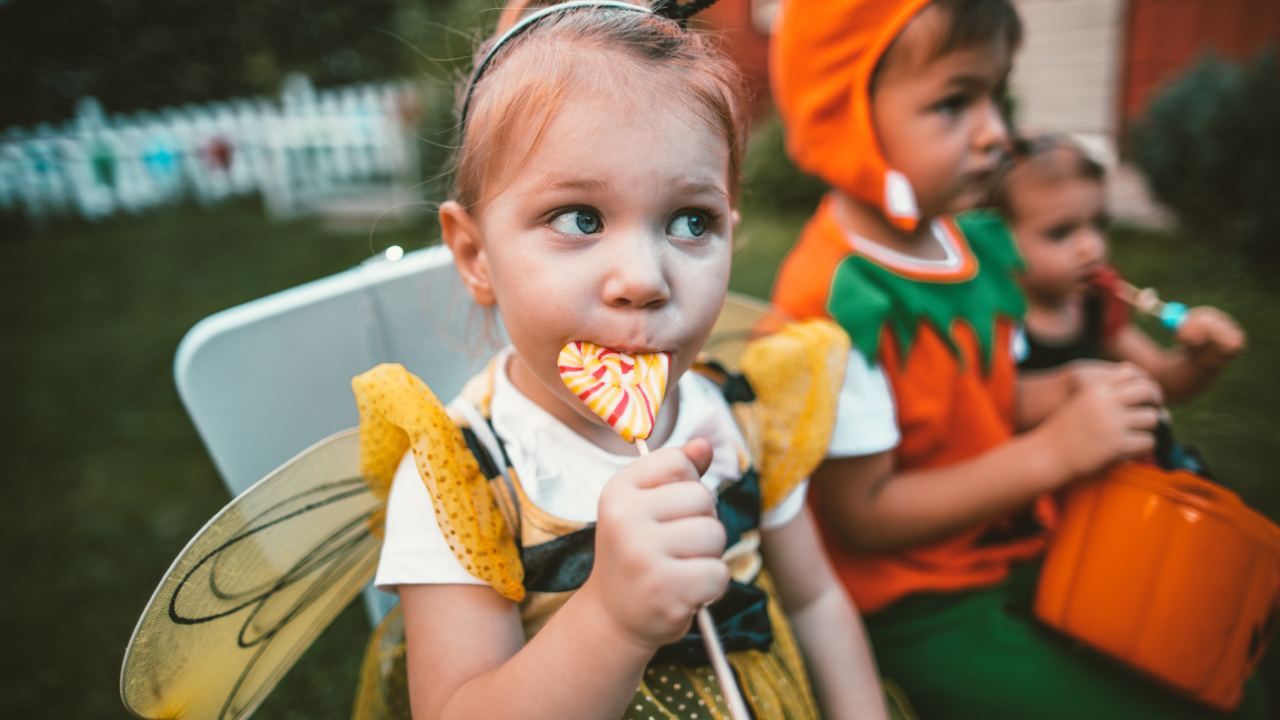
Your child will learn to manage sweets and to keep them in proportion to the other foods they eat if you matter-of-factly include them in family meals and snacks.
Children who have regular access to sweets and other forbidden foods eat them moderately. Children who don’t have regular access load up on them when they aren’t even hungry. If you have a treat-deprived child, you know they also beg, whine, and sneak to get high-sugar, high-fat foods.
A learning opportunity
Halloween candy presents a learning opportunity. Work toward having your child be able to manage his own stash. For them to learn, you have to keep your interference to a minimum. When they come home from trick-or-treating, let them lay out their booty, gloat over it, sort it and eat as much of it as they want. Let them do the same the next day. Then have them put it away and relegate it to meal- and snack-time: a couple of small pieces at meals for dessert and as much as they want for snack-time.
If they can follow the rules, your child gets to keep control of the stash. Otherwise, you do, on the assumption that as soon as they can manage it, they get to keep it. Offer milk with the candy, and you have a chance at good nutrition.
Wise use of sugar does not affect behavior
Despite what most people think, studies show sugar does not affect children’s behavior or cognitive performance. My own observation is that children who are allowed to eat sugar instead of meals and snacks provided for them by their parents are likely to show “deficits in behavior and cognitive performance.” That has to do with poor parenting, not poor food selection. The key phrase in my candy advice is relegate it to meal- and snack-time.
Structure is key. Maintain the structure of meals and sit-down snacks. Retain your leadership role in choosing the rest of the food that goes on the table. With that kind of structure and foundation, candy won’t spoil a child’s diet or make them too fat.
Preserve the fun of Halloween
Ann Merritt, reviewer, experienced parent and pediatric dietitian, makes an observation about this important topic. ”This advice should be in every parents’ magazine every year. I have seen so many kids have Halloween ruined for them when parents are over-concerned about sugar.” When you consider that for many children, Halloween is their very favorite holiday, that is a serious concern.”
100 Wilburn Rd., Ste. 100, Sun Prairie WI, USA, 53590
Phone number: 848-217-5177
Phone number: 848-217-5177
Copyright © 2026